
For my last coaching session, I brought a list of questions about our team setup. One product manager wants to move to our managed service, so who takes over the areas that become free? My coach listened and then said that all of it was tactics and that the business strategy behind it was missing: where the money is supposed to come from, and which products follow from that.
My first reaction was that we had done that work. We have a five-year plan and a balanced scorecard.
But one line in the plan stood out: we call it Future Star. By the last year it carries about a sixth of our revenue, and nobody can say which product it is.
Looking back, I do not think we did too little strategy work. We did it through the wrong lens. We forecast revenue per business line instead of deciding which customers we want to win, with what, and what we stop doing for that.
What Is the Difference Between Strategy and Tactics?
Strategy is the decision about where a company wants to win and what it will stop doing to get there, while tactics are the steps that carry out that decision. A simple test: if answering a question would not make you stop anything, the question is tactical.
By that test, every question on my list was tactical. Who should own which area depends on which areas matter, and we had never decided that.
What We Had Instead of a Strategy
Our plan grows every business line at the same time, plus the placeholder. More than a quarter of the planned growth comes from lines that do not earn anything today.
Our engineering time followed a different logic. Close to half of last quarter’s tickets went into a new software module without a paying customer, while our largest business line got almost none.
We did run experiments. But our interviews tested whether customers felt the pain, not whether the business would work. The new module passed that test in six of seven interviews, and willingness to pay only came up after we had built it.
The more uncomfortable part is that we once had an endgame. Nine months ago, I wrote a memo that did the maths: our software for smaller customers would need hundreds of additional customers to reach the plan, roughly our entire home market, while enterprise customers would need about thirty. So we focused on one enterprise anchor deal.
When that deal fell through, we did not replace the endgame. We replaced it with several initiatives in parallel, each reasonable on its own.
Thiel and Ries Are Not Opposites
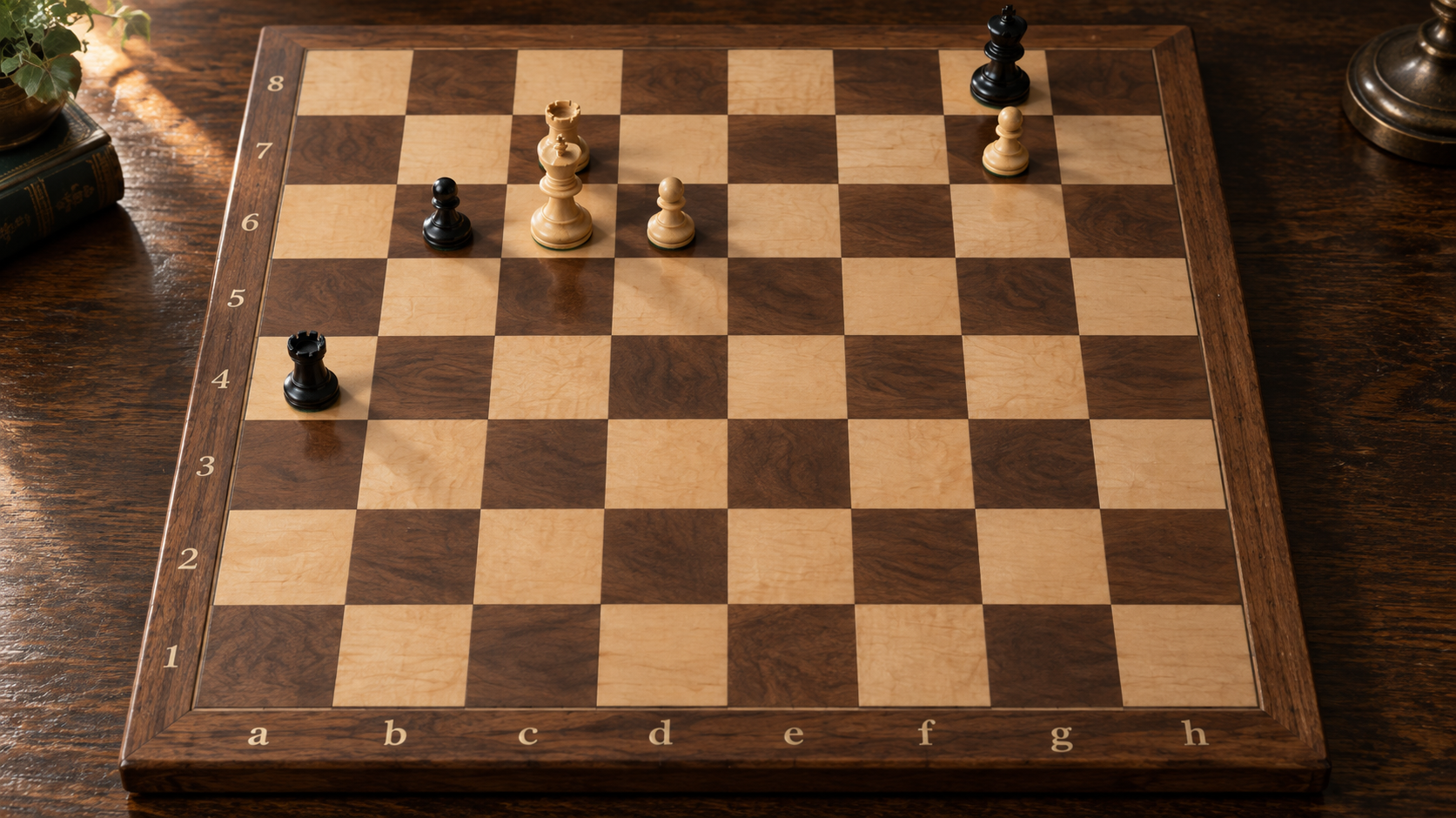
My first instinct was to read this as Peter Thiel against Eric Ries. In Zero to One, Thiel quotes the chess champion José Raúl Capablanca: “you must study the endgame before everything else.” Lean Startup is about learning your way forward.
I no longer think they contradict each other. Ries separates vision, strategy and product. In the Lean Startup principles, a pivot is a course correction that tests a new hypothesis about the product, strategy and engine of growth. We had a vision and we had experiments, but not the layer in between.
With AI-assisted engineering, this matters even more. I wrote recently about what happens when building gets faster than learning. Our new module shipped in about seven weeks, so the constraint is now deciding what to build.
What We Are Changing
For our next planning round, we want to start from the end: which customers we want to win, with which problem, and where the money comes from. The placeholder either gets a customer, an owner and a first test, or it leaves the base case. And because not every line can grow at once, we will write down what we stop doing.
Our own numbers already point in one direction: customers pay us for outcomes and responsibility more than for tools. The line that grew fastest this year was done by hand first and automated later.
The team questions from my coaching session are still open. I expect most of them to answer themselves once the strategy above them is clear.
Experiments can tell you how to get somewhere. They cannot tell you where to go.
Leave a Reply